Wildlife & sustainability
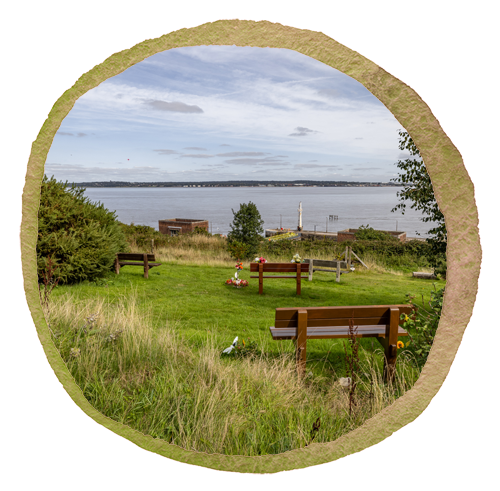
The site is located on the eastern edge of the Wirral peninsula. It is bounded to the east and south by Eastham Locks Gatehouse, Eastham Locks and the Queen Elizabeth II Dock, with the River Mersey beyond to the East. Eastham Country Park bounds the west of the site, on the far side of Ferry Road and supports an abundance of wildlife and contains some of the finest mature trees to be found on the Wirral.
The burial ground sits in a commanding position 30m above the River Mersey. History suggests the land was raised in the 1950’s from the dredged material taken from the construction of the Queen Elizabeth II Dock.
The burial ground benefits from being a stones throw from two important environmentally designated sites, Mersey Estuary Site of Special Scientific Interest (SSSI), and Mersey Estuary Ramsar and Special Protection Area (SPA). They are located approximately 100m and 130m to the east respectively, on the far side of land associated with Eastham Locks. These sites are internationally important for wildfowl and waders on account of intertidal sand and mudflat habitats.
The burial ground also benefits from being in close proximity to several areas of broad-leaved deciduous woodland which is recognised as a Priority Habitat (UK Bio-Diversity Action Plan).The closest area is located immediately adjacent to the south-western boundary of the site, with further large pockets also to the west and north, which comprises Eastham Country Park.
The extensive areas of grassland which comprises the majority of the site are recorded as semi-improved neutral grassland, dominated by finer grasses such as fescues, with locally abundant patches of tufted hair-grass, crested dog’s-tail, sweet vernal-grass, rough meadow-grass and frequent common and creeping bent. Other less abundant grasses recorded include cock’s-foot, Yorkshirefog, Timothy and couch grass sp.
Mayfields Woodland Burial Ground is working closely with Cheshire Wildlife Trust who are undertaking ecological monitoring at the site. The results will feed into a site wide habitat management plan which will provide recommendations on how best to deliver site wide environmental enhancements.
Bulbs and flower planting
We take care to remove any unnatural materials left behind at our grounds and request that only native plants that comply with our ‘native and wild’ ethos are planted or sown on burial or cremated remains plots.
Trees
To ensure the long-term health of the woodland and safe access for visitors we regularly undertake pruning and on occasion the cutting down trees. When any tree cutting or clearance work is undertaken, we ensure the waste wood is used to provide log pile habitats for invertebrates and amphibians.